Artificial intelligence is no longer just a research concept. Today, next generation AI systems are already being used across industries to automate tasks, improve decision-making, and create new technologies. Advances from organizations like OpenAI, Google DeepMind, Anthropic, and NVIDIA have made modern AI systems far more powerful than earlier technologies.
Table of Contents
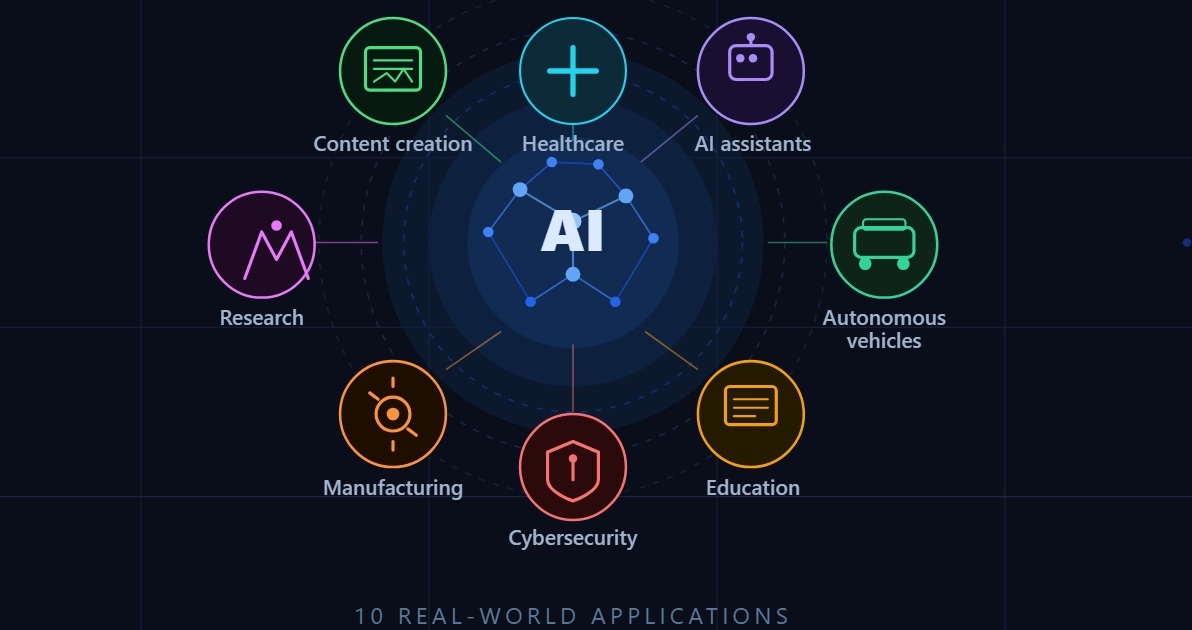
10 Real World Next-Gen AI Examples
1. Advanced AI Assistants
Modern AI assistants can do far more than answer simple questions.
AI models developed by OpenAI can assist with tasks such as:
- writing articles
- generating code
- summarizing documents
- analyzing data
- brainstorming ideas
These systems function as powerful productivity tools for individuals and businesses.
2. AI-Powered Scientific Research
Next-generation AI is accelerating scientific discovery.
Researchers use AI systems to analyze massive datasets and identify patterns that humans might miss.
For example, AI research from Google DeepMind has helped scientists understand complex biological structures and accelerate drug discovery.
This technology could significantly improve medical research in the coming years.
3. Autonomous Vehicles
Self-driving technology is another major example of next-gen AI in action.
Autonomous vehicles use AI systems to:
- detect objects on the road
- predict traffic behavior
- make real-time driving decisions
Companies like Tesla are continuously improving AI-powered driving systems.
These technologies aim to make transportation safer and more efficient.
4. Next Gen A in Healthcare Diagnostics
Next-generation AI is transforming healthcare by helping doctors detect diseases earlier and more accurately.
AI systems can analyze:
- medical images
- patient records
- genetic data
This technology assists healthcare professionals in diagnosing conditions such as cancer and heart disease.
Hospitals and research organizations are increasingly adopting AI-powered diagnostic tools.
5. AI-Driven Content Creation
Generative AI tools can now produce high-quality content in various formats.
Next-generation AI systems can generate:
- articles
- marketing copy
- images
- videos
- software code
Companies like OpenAI and Anthropic are leading advancements in generative AI technologies.
These tools are widely used by creators, marketers, and developers.
6. AI Agents for Business Automation
AI agents are systems capable of performing complex workflows without constant human supervision.
Businesses are using AI agents to automate tasks such as:
- customer support
- data analysis
- report generation
- workflow management
These systems can significantly boost productivity by reducing manual work, especially as Next-Gen AI Advancements in the IT Industry enable teams to complete hours of manual tasks in just minutes.
7. Next Gen A in Cybersecurity
Next-generation AI is helping organizations defend against cyber threats.
AI-powered cybersecurity systems can:
- detect suspicious activity
- analyze network behavior
- identify potential attacks in real time
By analyzing vast amounts of security data, AI can help prevent cyber incidents before they cause damage.
8. AI-Powered Software Development
Developers are increasingly using AI tools to assist with programming.
Next-gen AI systems can:
- generate code
- identify bugs
- suggest improvements
- automate repetitive tasks
These tools help developers work faster and focus on more complex aspects of software development.
9. Smart Manufacturing
Manufacturing companies are adopting AI to improve efficiency and reduce costs. AI-powered systems can monitor production lines and detect problems before they lead to equipment failures.
This technology allows companies to optimize operations and reduce downtime. Industrial automation powered by AI is becoming a key component of modern factories.
10. Personalized Education Platforms
Next-generation AI is transforming education through personalized learning systems.
AI-powered platforms can analyze a student’s learning style and adapt lessons accordingly.
This allows educational tools to:
- adjust difficulty levels
- recommend learning materials
- track student progress
Personalized AI tutors may become a common feature of future education systems.
Why These Examples Matter
These real-world examples show how next-generation AI is already influencing many areas of society.
Key benefits include:
- Increased efficiency: AI systems automate complex tasks and improve productivity.
- Better decision-making: AI can analyze large datasets quickly and provide valuable insights.
- Innovation across industries: AI is driving breakthroughs in fields such as healthcare, transportation, and education.
The Future of Next Generation AI
As research continues, next-generation AI technologies will likely become even more powerful.
Future developments may include:
- more advanced AI agents
- smarter AI assistants
- improved reasoning capabilities
- greater collaboration between humans and AI systems
Organizations such as OpenAI and DeepMind are continuing to push the boundaries of AI research.
Conclusion
Next generation AI is already transforming industries and creating new opportunities across the global economy. From autonomous vehicles and AI-powered healthcare to business automation and personalized education, these technologies are reshaping how people work and interact with machines.