Table of Contents
Generative AI is transforming how we create content, solve problems, and interact with technology. From writing text to generating images and videos, it’s rapidly becoming one of the most important advancements in artificial intelligence today.
As AI evolves into more advanced systems, concepts like Next Gen AI are shaping the future of intelligent machines and human-AI collaboration.
What is Generative AI?
Generative AI is a type of artificial intelligence that can create new content such as text, images, videos, and audio by learning patterns from existing data.
Unlike traditional AI systems, Generative AI produces:
- Text (articles, emails, code)
- Images (artwork, designs)
- Videos and audio
- Synthetic datasets
It works by learning patterns from large datasets and generating new outputs that resemble human-created content.
How Generative AI Works
Generative AI uses advanced machine learning models like neural networks and transformers to analyze large datasets and generate human-like outputs based on prompts.
Here’s a simple breakdown:
- Training Phase: AI learns patterns from data
- Model Architecture: Uses neural networks like transformers
- Generation Phase: Produces new content based on user input
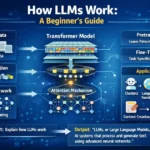
A major driver behind this technology is Large Language Models. If you’re curious about how these models function behind the scenes, exploring a beginner-friendly guide on LLMs can give you deeper insight.
Types of Generative AI
Generative AI can be categorized based on the type of content it generates:
1. Text Generation
- AI chatbots
- Content writing tools
- Code assistants
2. Image Generation
- AI-generated art
- Marketing creatives
- Product designs
3. Video & Audio Generation
- AI video creation
- Voice synthesis
- Music generation
Real-World Examples of Generative AI
Some widely used tools include:
- ChatGPT – for conversations, writing, and coding
- DALL·E – generates images from text prompts
- Midjourney – creates high-quality artistic visuals
These tools demonstrate how AI is moving beyond automation into creativity.
Use Cases of Generative AI
Generative AI is reshaping multiple industries:
Business & Marketing
- Automated content creation
- Personalized campaigns
- AI-powered customer support
IT & Software Development
- Code generation
- Debugging assistance
- Documentation automation
If you’re exploring how AI is transforming the IT landscape, learning about next-generation AI advancements in the IT industry can provide valuable context.
Healthcare
- Drug discovery
- Medical imaging
- Data simulation
Education
- AI tutors
- Content summarization
- Smart learning systems
Benefits of Generative AI
Generative AI provides several advantages:
- Boosts productivity by automating tasks
- Enhances creativity with new ideas and designs
- Reduces costs by minimizing manual work
- Scales easily for large content needs
Limitations of Generative AI
Despite its capabilities, Generative AI has some drawbacks:
- May generate inaccurate information
- Can reflect biases from training data
- Raises ethical concerns (e.g., deepfakes)
- Requires high computational resources
Generative AI in Next Gen AI
How Generative AI Fits into Next Gen AI
Generative AI is a core component of Next Gen AI, representing the evolution from rule-based systems to intelligent, creative machines.
It enables:
- Human-like interactions
- Advanced automation
- Personalized AI experiences
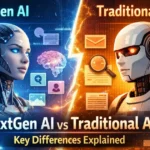
To understand this broader shift, exploring what defines Next Gen AI and how Next Gen AI differs from traditional AI can help you see the bigger picture.
Future of Generative AI
The future of Generative AI is rapidly evolving.
Key trends include:
- Multimodal AI (text, image, and video combined)
- Real-time AI generation
- AI-powered virtual environments
- Deeper integration into everyday tools
As it continues to improve, Generative AI will become more accurate, accessible, and impactful.
FAQ
Is ChatGPT, Gemini, and Claude Generative AI?
Yes, tools like ChatGPT, Gemini, and Claude are all examples of Generative AI. They are built on large language models (LLMs) and can generate text, answer questions, and assist with various tasks.
What are the top 5 Generative AI tools?
Some of the most popular Generative AI tools include:
1. ChatGPT (text generation and assistance)
2. DALL·E (image generation)
3. Midjourney (AI art creation)
4. Gemini (Google’s AI assistant)
5. Claude (AI assistant by Anthropic)
These tools showcase how Generative AI is applied across different domains.
Are Gen AI and Generative AI the same?
Yes, Gen AI is simply a shorter term for Generative AI. Both refer to the same technology that creates new content using artificial intelligence.
What is the meaning and definition of Generative AI?
Generative AI is defined as a branch of artificial intelligence focused on generating new data or content that mimics human-created outputs using learned patterns from training data.
Conclusion
Generative AI is redefining how we interact with technology by enabling machines to create, innovate, and assist like never before.
As part of the broader Next Gen AI ecosystem, it plays a critical role in shaping the future of intelligent systems. Exploring more about Next Gen AI and its advancements can help you stay ahead in this rapidly evolving space.